How to compare Techmark heat-pump, instant, and storage water heaters
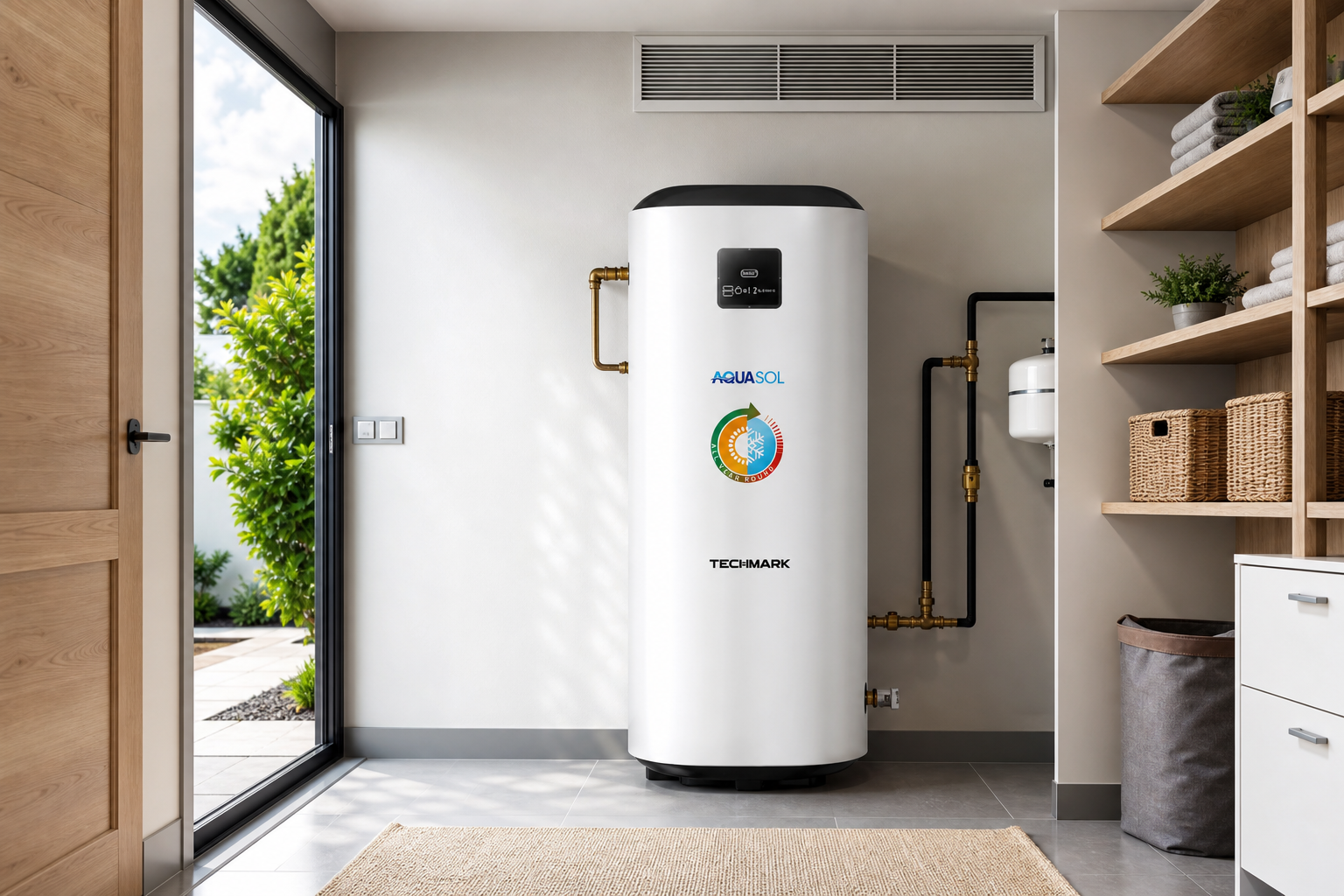
Compare first-hour delivery, flow at temperature rise, operating modes, and installation needs before requesting a water-heater quote.
Reviewed
Separate stored capacity from first-hour delivery
ENERGY STAR defines first-hour rating as the hot-water volume a storage heater can deliver during an hour starting with a fully heated tank. Tank litres alone do not describe that delivery capacity.
For a Techmark enquiry, list the busiest bathing period and which outlets overlap. Ask for model-specific delivery and recovery data under stated test conditions. Keep gallons and litres consistent when comparing imported documentation.
- Record the number of users and the duration of the peak period.
- Ask how long the tank takes to recover after the expected draw.
- Compare systems against the same demand schedule.
Size an instant heater by flow and temperature rise
The DOE Building America tankless guide sizes demand against simultaneous outlet flow and the difference between incoming and required outlet water temperature. A flow claim without a temperature-rise condition is incomplete.
As a planning example, heating incoming water from 20°C to 40°C requires a 20°C rise; an inlet at 10°C requires a 30°C rise for the same outlet target. These are illustrative inputs, not a Techmark model rating or a recommended storage temperature. Request the selected model's flow curve before choosing capacity.
- Measure or estimate the coldest expected inlet temperature.
- Add the flow of outlets expected to run together.
- Have the installer check electrical supply and the manufacturer's installation requirements.
Read efficiency claims with their test conditions
ENERGY STAR describes UEF as an overall efficiency measure defined by the U.S. DOE test method. Treat it as a documented test metric where available; do not assume every India-market model has a UEF rating or ENERGY STAR certification. Ask which test standard and operating conditions support any quoted efficiency figure.
ENERGY STAR explains that typical hybrid heat-pump heaters can use a heat-pump-only economy mode, a hybrid mode, or electric resistance heating. Resistance-only operation is less efficient. Confirm the modes actually available on the proposed AquaSol model and how backup heating affects the estimate.
- Request an energy estimate using your tariff and demand profile.
- Confirm ambient limits, airflow, drainage, and service access in the installation manual.
- Compare equipment, installation, and maintenance costs together.
Match the storage-heater label to the exact quoted model
BEE's stationary storage-type electric-water-heater labelling rules make the practical buying point clear: label information belongs to an approved model, not to a generic product family or a marketplace image. If a star label is relevant to the shortlisted heater, compare the model code, capacity, label period, and the information on the written quotation before approving an order.
BEE also says a QR code on a star-labelled appliance can be used to retrieve and verify the technical specifications displayed on the label. That is a useful authenticity and comparison check, but it does not replace confirmation of Techmark's supplied model, warranty, installation scope, and local electrical requirements.
- Ask for the exact storage-heater model code and capacity on the quotation, rather than accepting a family-level description.
- Where a BEE label and QR code are present, compare the retrieved model details with the unit and quote before delivery acceptance.
- Keep the label record, model code, warranty terms, and installation scope together for service and repeat-order checks.
Prepare a useful water-heater quote brief
Send Techmark the city, site type, number of users, overlapping outlets, inlet-water estimate, installation photos, and available electrical supply. Include any space, noise, or servicing constraints. This checklist is a practical application of the sizing principles above; final model selection needs a site assessment.
- Instant: request output flow at your required temperature rise.
- Storage: request peak delivery and recovery time.
- Heat pump: request performance at site conditions and the backup-heating assumptions.
Compare documented performance against the same household or project demand. The sources explain selection principles; Techmark model specifications, local installation requirements, and written quotations determine the final choice.
Sources
- Water Heater Key Product Criteria — ENERGY STAR
Defines first-hour rating, flow at a specified temperature rise, and UEF in the U.S. testing framework.
- Measure Guideline: Transitioning to a Tankless Water Heater (2012) — U.S. Department of Energy / Building America
Technical background on simultaneous flow, inlet temperature, and retrofit planning; not current India pricing or regulations.
- How it Works — Heat Pump Water Heaters — ENERGY STAR
Explains heat transfer and typical economy, hybrid, and resistance heating modes.
- IT Tools QR App Portal — Bureau of Energy Efficiency, Government of India
BEE explains that QR codes on star-labelled appliances can help consumers retrieve and verify the technical specifications shown on the label.